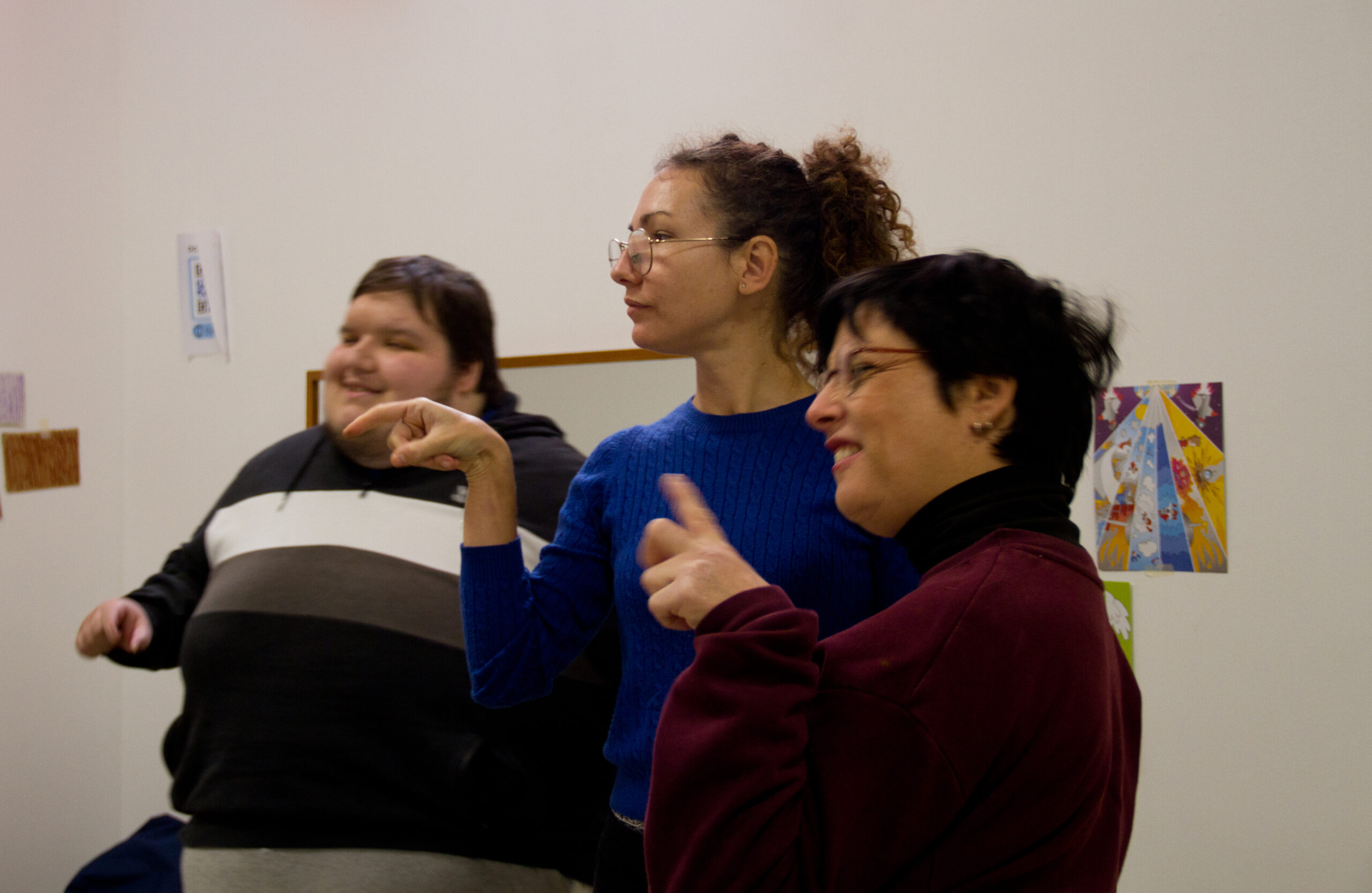
ArtElevate mentor, Mette Elimar Jensen, on creative autonomy, presence, and improvisation in working with artists with intellectual disabilities
Every now and then, you encounter people who work with art in a way that makes the concept of inclusion feel too narrow and too technical. For Mette Elimar Jensen, art mentor at GAIA Academy, working with people with intellectual disabilities is not about adapting art to special needs – it is about creating a space where everyone is already equal.
Mette is a trained mediator and artist and has worked for many years with both children and adults with special needs. She consciously uses the word artist when speaking about the people she works with. Not as a pedagogical strategy, but as a fundamental view of the human being.
“Art is a universal language. In art, everyone is equal. We can swim like fish in water.”
Art begins before technique
When Mette facilitates artistic processes, she does not begin with materials, techniques, or predefined outcomes. She begins with presence. With listening. With openness.
“When something arises in the artist’s mind, we pause, take a breath, and walk the tiny, almost invisible path together.”
She is fully aware of artistic tools and methods, but they are not the most important question in the beginning. What matters first is the relationship and the trust. Only then can art begin to take form.
When the wall softens
The work also involves resistance. There are days when it feels as if the artist is surrounded by a wall. In those moments, Mette’s tools are not explanations or corrections, but her voice, her patience, and the time spent together.
“With my voice, my patience, and our time together, the wall softens.”
Change does not happen by trying to transform another person, but through presence. When the wall crumbles, something new becomes possible.
“When the wall falls, we can walk on water together.”
Creative autonomy as the engine
Creative autonomy is a fundamental value in Mette’s work. She describes it as the engine of all artistic development. Art is not decoration or production – it is a language. A way of expressing ourselves.
As an art mentor, her task is not to lead from the front, but to support the artistic voice. In this work, she draws inspiration from the learning theorist John Dewey and his idea of learning by doing and reflection.
Through shared reflection on colors, shapes, and expressions, new processes emerge. Learning and consciousness are connected, and development happens in movement rather than in conclusions.
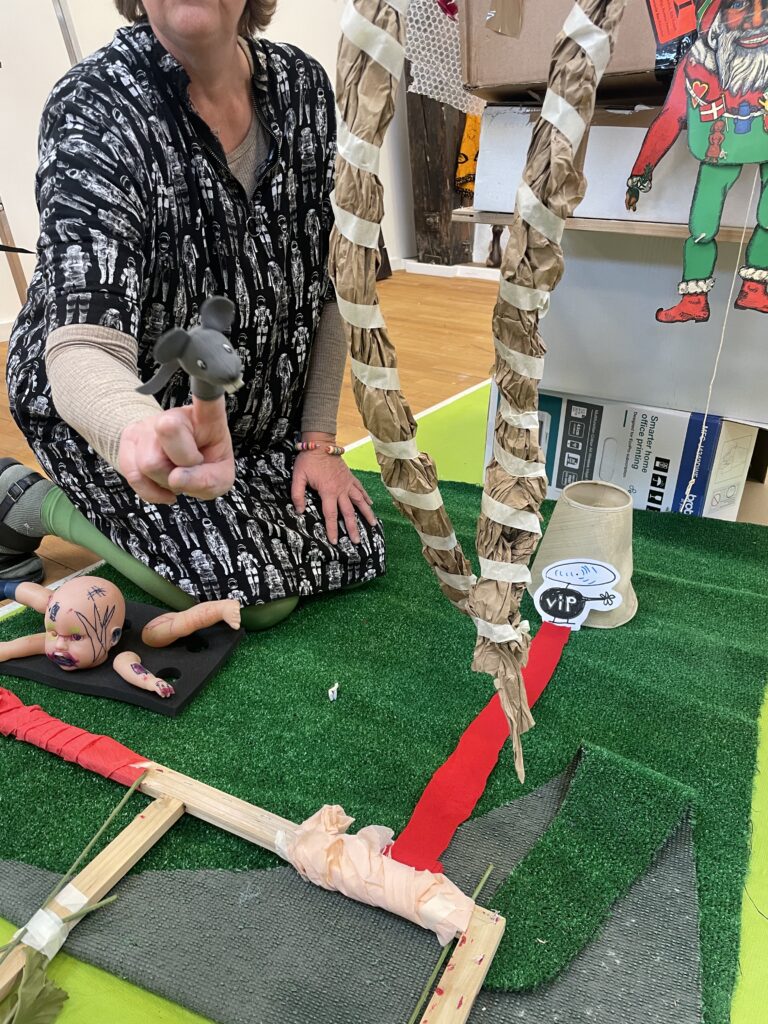
The most important tool is the human being
When asked which tools and materials are most important, Mette does not mention paint or paper. She mentions herself.
“I use myself to create a free space together with the artist.”
In that space, possibilities arise. Sometimes this means finding scissors or clearing obstacles out of the way. Other times it means listening and responding to the artist’s own reflections on their work.
It is not primarily about the color, the size of the paper, or the tools we use – it is about the approach.
Improvisation and the courage to say yes
One of the most important skills for artists mentoring individuals with intellectual disabilities, according to Mette, is improvisation.
Improvisation is often described as a creative act where the result is not determined in advance, but created in the moment. Working with improvisation teaches us to place ourselves on an open and welcoming platform.
“We always say yes. Even when we do not yet know the way.”
Creation happens through collaboration and mutual respect. It requires open eyes and conscious participation – and it requires training. Improvisation is not randomness; it is a discipline best learned with guidance from professional improvisers.
Knowing better kills motivation
If there is one thing Mette believes mentors should understand before beginning this work, it is this: knowing better is deadly for motivation.
Working with art requires respect. Every artist carries their own artistic voice, and that voice needs care and guidance to grow. Motivation must be supported and encouraged – not controlled.
It is not about labels. It is about meeting another human being.
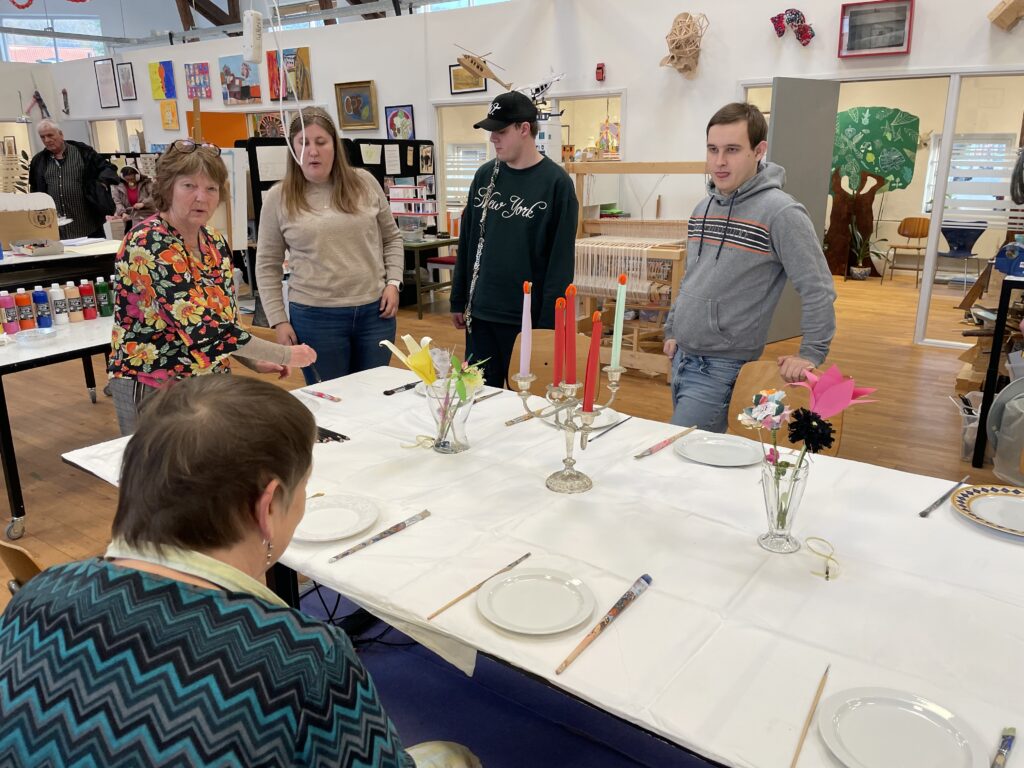
Art belongs to no one – and to everyone
Mette also points to a gap in current methodologies and resources: our tendency to stumble over our own understanding of what art is, and who it is for.
“No one owns the concept of art. Art belongs to everyone.”
Everyone has the right to raise their artistic voice. When we forget that, we risk closing doors instead of opening them.
And perhaps this is where Mette’s work touches something essential: Art is not merely an outcome, but a space. A place where, if we dare to be present, patient, and open, we can walk on water together.