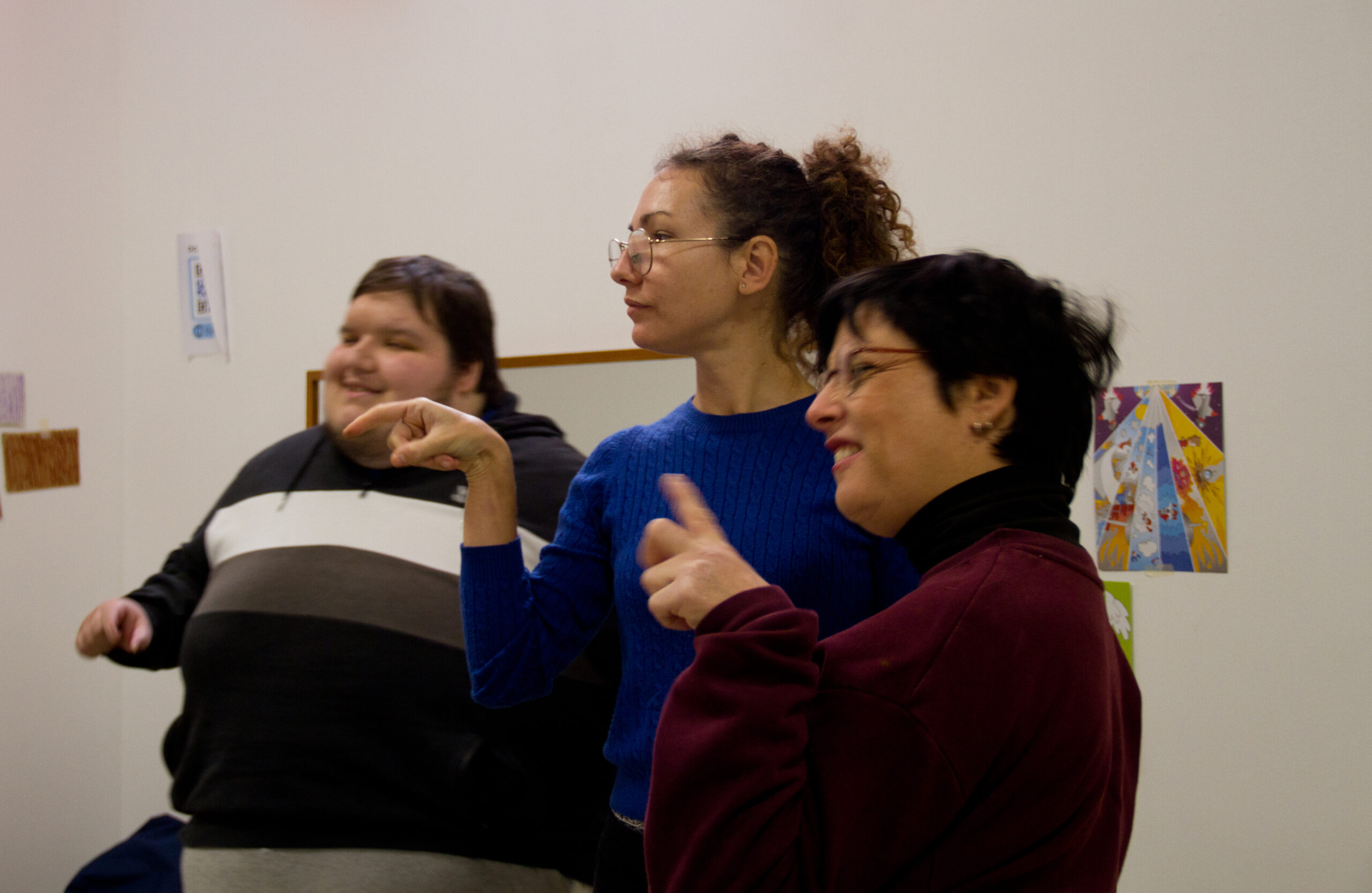
Artistic mentor: Benjamin Kreže
Before each workshop, I took time to prepare not only the technical setup, but also the way I would communicate. Film is a complex medium, so my first task was to simplify the language, slow the pace down, and show the process step by step. I introduced stop-motion animation using cut-out techniques, demonstrating how still images can slowly come to life through movement.
We began in a very simple way: by looking through magazines. Everyone picked images they liked, without pressure or rules. The first task was just cutting out pictures that felt interesting, funny, strange, or familiar. Soon the table filled with fragments — animals, food, objects, textures.
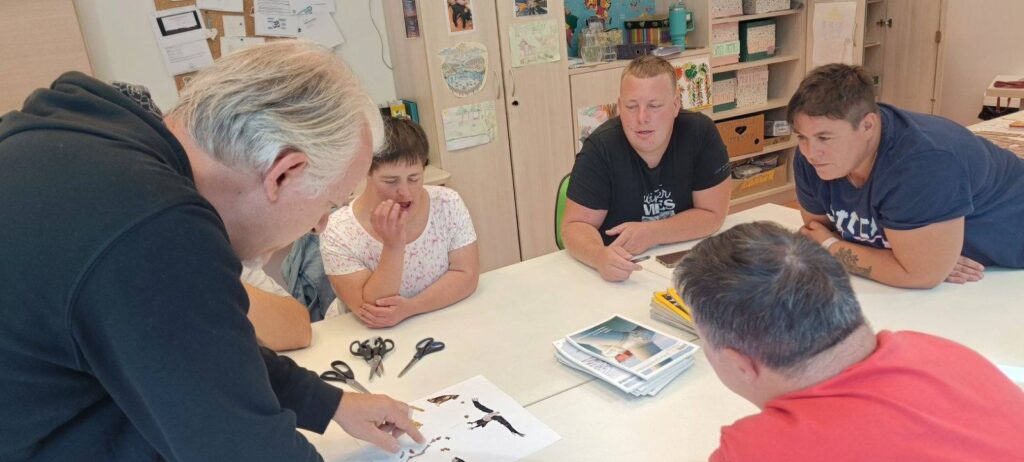
Once the images were laid out, something unexpected happened. As a group, we started noticing connections between them. A common theme slowly emerged — animals and food kept reappearing. From this, an abstract story evolved: a playful hunt for lunch. It wasn’t planned, it simply surfaced through collective intuition and curiosity.
The real transformation began when we started animating. Moving the images frame by frame and then watching them move on screen was a powerful moment. The artists could immediately see the results of their actions. Each workshop session became one small segment of the story, and over time, these segments grew into a complete animation during the editing process.
In the final phase, we focused on sound. The artists experimented freely — humming, making animal noises, vocal rhythms, and spontaneous sounds. These were recorded and layered into the film, adding personality, humour, and emotion. The animation truly came alive at that point.
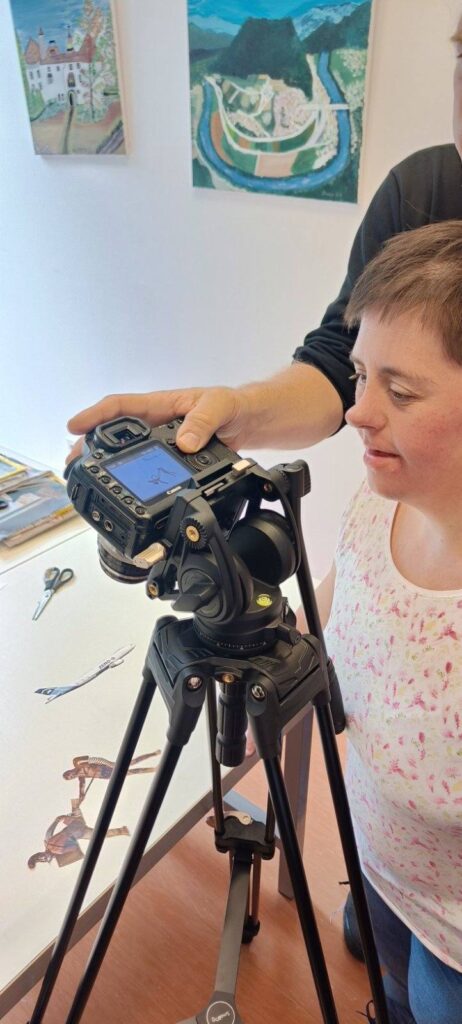
What stayed with me the most was the energy and willingness to participate. The artists were always present, engaged, and supportive — not only during the creative work, but even when it came time to clean up. They helped carry equipment, pack the camera and lights, and load everything into the car without being asked.
One day, other participants from the VDC centre visited the room. Suddenly, everyone wanted to join in. The space filled with curiosity and excitement. That moment made me reflect deeply on my own assumptions.
As a filmmaker, I’ve always understood film as a medium that depends on a crew — structure, roles, coordination. At first, it felt almost impossible to imagine working with film in a context involving artists with intellectual disabilities. But through time, patience, and trust — and by giving space for exploration rather than control — I realised something important:
It is possible.
Not by simplifying creativity, but by opening it up.
This workshop reminded me that film doesn’t start with equipment or technique. It starts with attention, play, and the courage to let images move — together.